
Introduction
Sportswear apparel is designed clothing
tailored for physical activities and sports It includes footwear, worn for
sport and others. Sport apparel is specifically worn for most sports for safety
or comfort reasons. Beyond its functional use, sportswear has found its place
casually, reflecting a blend of style and functionality. Typical sport apparel
includes T-shirts, tracksuits, shorts, and polo shirts, and specialized
garments, including swimsuits (for swimming), ski suits (for skiing), leotards
(for gymnastics), and wet suits (for diving or surfing). Similarly, sports
footwear includes riding boots, trainers, football boots, and ice skates. These
garments are often made from lightweight, breathable, and moisture-wicking
materials that help regulate body temperature and keep athletes dry during
intense physical exertion.
Industry Market Size and CAGR
The global sports apparel market was
estimated to generate around 213 billion U.S. dollars in revenue in 2023.
Revenues are forecast to increase and reach around 294 billion U.S. dollars in
2030.


Sports Apparel Market Segment Analysis
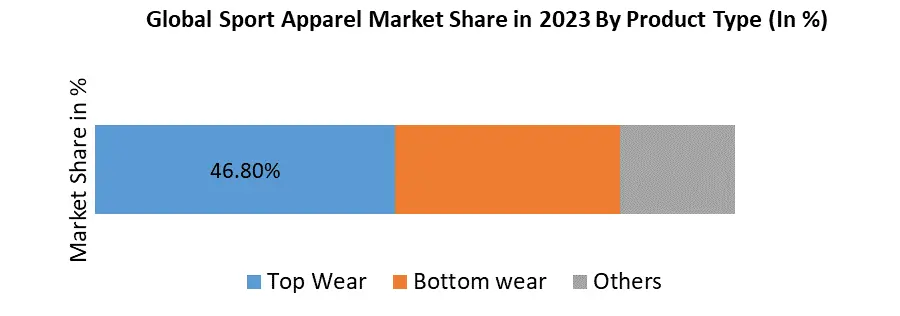
1. By product segment: the Sports Apparel market is divided into Top Wear,
Bottom Wear, and Support items. As of 2023, the Top Wear category dominated
with an estimated value of USD 81.2 billion and is forecast a CAGR of 5.2%
throughout the forecast period. The rising preference for sports apparel within
the Top Wear category, compared to other top clothing items, significantly
propels Sports Apparel market demand. This segment encompasses products like
t-shirts, sweatshirts, sports vests, and sports hoodies, among others.
Geographically, the United States represented the leading regional Sports
Apparel market in the Top Wear category, capturing 34.7% of global sales in
2023. The Tops & T-shirts Segment is expected to account for the large
Sports Apparel market share, as a result, sales have increased significantly
for T-shirts and tops. This surge in demand drives a greater need for quality
fabrics to enhance performance. Some
common fabrics for producing sports apparel clothing are microfiber, polyester,
calico, and spandex.

2. By End User: The Sports Apparel market presents an
opportunity segmented into Men, Women, and Children. The Men's segment
currently dominates with an expected Sports Apparel market value reaching USD
129.3 billion in the forecast period. This growth is driven by men's increased
participation in sports and physical activities, coupled with the rising appeal
of stylish and comfortable sportswear. Meanwhile, the Women's segment offers
promising growth potential is CAGR of 7.19% during the forecast period. Factors
such as cultural shifts and increased female participation in various sports,
yoga, gym, and physical activities fuel this growth. Women working out and
playing sports was not a norm until recently. However, despite introducing the
women's category and breaking societal stereotypes, the proportion of men in
sports is far more than that of women. Furthermore, the number of men hitting
the gym or adopting new sports is much more than that of women, contributing to
their dominance in the segment.Women represent a significant proportion
of runners, indicating a substantial growth trajectory for the Women's segment
in the upcoming forecast period. Additionally the children segment also
contributed to the potential growth and share a 22 % market share in the sports
apparel market in 2023.

By Distribution Channels: The global Sports Apparel market is divided into Online and Offline members, the offline member is again divided into 3 corridors which are Franchised Sports stores, Brand Outlets, and Independent Sports stores, but the online or E-commerce member has the largest share in the Sports Apparel Market. The offline section includes supermarkets, hypermarkets, speciality shops, department stores, and other store-based distribution channels. These shops are favoured over internet retailers because they let customers visually examine the products, try them on, and get help if necessary. They provide a wide choice of brands and prices to suit every customer's budget, wants, and preferences. They are trusted, real merchants selling authentic goods that provide customers peace of mind. Leading market companies have a vast global network of stores, which fuels the segment's expansion. On the other hand, the shift of businesses to vend their products, services, and content through e-commerce platforms presents an occasion. E-commerce has emerged as a significant avenue for growth, allowing brands to reach a wider customer base and provide a convenient shopping experience. This trend is particularly appealing to individualities with time constraints in the moment's society, as online ordering eliminates the need to visit promenades or physical stores. Over the course of the forecast period, the Offline category is expected to exceed all other market segments by 87.98 billion, having had the biggest market share of 39.6% in 2023. Because they provide merchandise from international brands like Adidas, Nike, and others, stores, hypermarkets, and specialty showrooms are becoming more and more popular, which is contributing to the growth of the offline Sports Apparel market. The segment's growth is ascribed to options like free trials and discounts before purchases, as well as the advantage of instant gratification driving Sports Apparel market development. Throughout the course of the forecast period, the online category is expected to grow at the fastest rate i.e. CAGR 8.71%. The market is driven by consumers who compare items and prices thanks to the growing usage of smartphones and the internet for online shopping.

Sports Apparel Market Regional Insights
In the regional analysis, North America represents
40 % of the market share in 2023 and is expected to reach a CAGR of 6.58%
during the forecast period. The growing emphasis on health consciousness and
the rising popularity of active lifestyles are key drivers for the sports
apparel market in this region. By 2023, the market in the United States alone
is expected to reach USD 63.4 billion. Also, Japan and Canada arise as
significant global markets, with growth rates of 3.1% and 3.4%, respectively,
for the forecast period. Germany is poised to experience a CAGR of
approximately 3.8% within Europe, also the high income and strong sports other
countries like France, UK, hold the largest share in the market.
The rising influence of sports like
basketball, baseball, and soccer and the increase in strict focus on health
among people has led North America to hold the dominating market share in the sports
apparel market globally. With a CAGR of around 7-8%, the US is a major
contributor to the dominance of North America. Key companies such as Under
Armour, Adidas AG, Nike, Inc., PUMA SE, Ralph Lauren Corporation, and Fila
Holdings Corp in North America are catering to the rising demand for active
lifestyle culture and fitness-conscious population.
During the forecast period, the Asia
Pacific region is set to experience the highest growth, driven by the rapidly
evolving retail infrastructure and the increasing disposable income of
consumers. China leads in demand, fueled by its growing population. Additionally,
changing lifestyles, rising disposable incomes, and heightened health awareness
actively contribute to the expansion of the sports apparel market in this
region. Asia Pacific emerged as the largest market for the global sports
fitness clothing market, with a 41% share of the market revenue in 2022.
Global Sports Apparel Market Scope
The sports apparel market can be
segmented on the basis of sports, material, type of print, distribution channel,
and end-user. The growth amongst these segments will help you analyze meager
growth segments in the industries and provide you with a valuable market
overview and market insights to explain strategic decisions for identifying
core market applications.
Sports:
- Soccer
- Basketball
- Baseball
- Others
·
Material:
· Synthetic
· Type of Print
· Water Based
· Silicone Emboss
· Reflective Transfer
· Pigment
· High Density
· Foil
· Glitter
· Cracking Ink
· Discharge
· All Over Print
· Photo Print
· Others
Distribution Channel:
· Supermarket/Hypermarket
· Brand Outlets
· Discount Stores
· Others
End-User:
· Women
· Children
“Soccer” dominates the category segment of the sports apparel market due to its immense worldwide popularity and the large fan and player base driving demand for soccer-related apparel.
Industry dynamics
Growth drivers and opportunities:
- Firstly, these businesses are now expanding their budgets for marketing research and development, as well as enhancing their distribution channels to maintain a competitive edge.
- The rising adoption of an active lifestyle: One of the key growth drivers in the sports apparel market is the increase in focus on health & fitness. As individuals become more health-conscious and strive for an active lifestyle, the demand for sports apparel has surged. The increasing incidence of lifestyle diseases has shifted consumer preferences towards healthy and regular exercising for longevity and overall physical and mental well-being. Introducing fitness centres, gyms, yoga studios, and sports clubs in tier-2 and 3 cities has also helped the rising adoption of fitness or an active lifestyle. Furthermore, the introduction of accessible and affordable clothing offered by multiple brands giving consumers a wide variety of choices is augmenting the market's growth, especially in emerging countries.
- Growing huge number of participants in the many sports activities: this is an opportunity for the growth rate of the sports apparel market.
- New technological trends show growing demand: Ideal sports fitness gear has the following characteristics: strength, stretchability, elastic recovery, abrasion resistance, tear resistance, color fading, body odor resistance, and UV resistance. The degree to which these qualities are utilized will depend on the sport or fitness activity. Sports and fitness apparel is preferred for quick drying, temperature management, good air and water permeability, moisture wicking, and quick absorption capabilities. Wearing the appropriate clothing decreases the likelihood of getting wounded, boosts confidence, improves performance, and speeds up recovery. The right sports clothing improves performance and may help prevent injuries and speed up recovery between workouts. The correct clothing also aids in improving blood flow, By boosting compression, reducing lactic acid accumulation, and wicking away sweat. Sweat-wicking fabric is used to construct sports gear to keep players dry and comfortable. Ergonomic designs are also another recent trend in the last few years. Sportswear apparel also provides protection from the environment: Sports apparel can help to protect from the environment. During outdoor exercise in the hot summer need loose clothes and breathable fabrics. It will help keep the body cool due to this the body doesn't overheat. In the cold winter, put a layer of clothes on your body to keep out the cold. However, it is also used as an outer layer because it provides ventilation, so that body temperature can be easily adjusted due to these factors increasing the demand of sports apparel which is expected to drive the growth of the market.
- Rising fitness awareness: growing awareness of health and fitness and consumers placing greater importance on maintaining an active lifestyle are another reason for the growing demand for sports apparel in the market.
- Popularity among consumers for performance-enhancing sports apparel:. There is an increasing number of product innovations for enhancing the features of apparel. The convenience of sports apparel with improved properties such as temperature control, moisture management, and other performance-boosting features that prevent potential injury and discomfort which has captured the interest of the consumers who have been observed to be eager to pay more for such additional aids. Constant research and development have led to innovative clothing like apparel with anti-microbial quick drying capability, compression technology, or moisture-wicking fabrics with temperature regulation technology. Market competitors are actively introducing sport-specific wear for various activities such as basketball, football, rugby, trail running, and golf, leveraging advancements in technology. These innovations are expected to drive significant growth in the sports apparel market during the forecast period. Consumers are screening and increasing their acceptance to pay a premium for all these additional benefits. Other features like advanced technical fabrications, innovative design, and product development predominantly position sports apparel as premium-priced products.
- Rising popularity among consumers for leisure wear: With the evolution of the economy and increasing disposable income, consumer’s preferences have changed and therefore there is a rise in the popularity of leisure wear or athleisure. The rise of the athleisure trend has been another significant growth driver that has blurred the lines between athletic apparel and everyday fashion, enabling consumers to seamlessly transition from workouts to casual wear. Also, there is an increase in the preference for outdoor recreational activities, especially among the young population, which has increased sports apparel sales. The Sports Apparel Market is catering to the rising demand of consumers, providing various apparel tailored according to their personal choice with consumer’s preference being the major driving force.
- With the increase in popularity of virtual fitness platforms, there is simultaneously a growing market for specialized sports apparel designed for specific activities such as yoga, cycling, and running.
- Rising wealth in the emerging sports apparel market: this is driving demand for sports apparel, indicating a wealthier consumer base.
- In recent years, influencer marketing and brand collaborations have become instrumental in promoting sports apparel brands. By partnering with social media influencers, athletes, and celebrities, brands can leverage their reach & credibility to enhance brand visibility & desirability among consumers. These collaborations help create a strong brand image and connect with target audiences on a more personal level. Aggressive advertisement and celebrity authorizations have been a significant component of their marketing approach, which involves endorsements and kit sponsorships. For example, Nike Inc., a prominent sports apparel company, collaborates with top global athletes like Cristiano Ronaldo, Neymar, and LeBron James for brand endorsements and to promote various sports products and apparel lines. These companies often sponsor uniform kits for numerous sports clubs and teams worldwide. The aggressive advertising campaigns associated with these partnerships contribute to driving growth in the sports apparel market.
- Major sports events: the Cricket World Cup, FIFA World Cup, Olympics, marathons, and others often trigger interest in fitness and sports, which eventually help in buying sports apparel.
- Sustainability: this has become a critical focus for both consumers and brands as a result of which there is rise in demand for eco-friendly and ethically produced sports apparel. Companies that embrace sustainability in their manufacturing processes and offer environmentally conscious products have the opportunity to differentiate themselves and attract conscious consumers.
- Intense competition from both established players and emerging brands. Thus, to stay competitive, sports apparel companies need to continuously innovate, invest in R&D, and offer unique products that meet evolving consumer demands
- Increase in the number of emerging markets. The market is expanding fast in emerging economies as there is a surge in the affluent population.
- Drivers for growth in sports apparel market also include factors such as rising levels of education, increased international travel, and exposure to information through cable television and the internet. These elements contribute to consumers becoming more health-conscious, as evidenced by the increase in health clubs, gymnasiums, and fitness centers.

Risks:
- -
High Costs and Low Awareness: The rise
in counterfeit products poses a significant challenge to the global sports
apparel market as it not only undermines brand trust and reputation but also
affects revenue streams, potentially harming legitimate businesses and
consumers who may receive subpar or unsafe products. It can lead to lost sales,
brand dilution, and potential safety risks for consumers.
- - Fluctuating raw material prices: global geopolitical uncertainties or health events lead to supply chain disruptions. The production, transportation, and processing are all affected by uncertainties, leading to supply shortages and cost increases. Therefore, fluctuating raw material prices can potentially negatively impact the market’s growth.
- -
Impact and Current Market Scenario of
Raw Material Shortage and Shipping Delays: Competitors must excel at assessing
strategic possibilities, creating effective action plans, and assisting
businesses in making important decisions.
- -
Expected Impact of Economic Slowdown on
the Pricing and Availability of Products: When economic activity slows,
industries begin to suffer. The forecasted effects of the economic downturn on
the pricing and accessibility of the products should be taken into account.
Competitors Overview
Some of the most important industry competitors:
Leading companies such as Nike Inc., Adidas AG, Puma SE, Under Armour Inc., VF
Corporation, Amer Sports Corporation, Umbro Ltd., Fila, Kappa, New Balance, Lululemon
Athletica, Columbia Sportswear Company, Anta International Group Holdings Ltd,
Li Ning Company Limited, Amer Sports, DESCENTE LTD, Decathlon Sports
India Pvt Ltd, Lafuma, Group Rossignol Inc. (U.S.), Volcom, LLC., SPYDER ACTIVE
SPORTS, Halti Global Store., BOGNER, Trek Kit India, Tube Pro, Inc, Airhead
Sports Group, L.L. Bean Inc., Agit Global, Inc., Emsco Group, Slippery Racer,
Gizmo Riders, and Zipfy Inc.
Competitive Landscapes:
In this segment, the Sports Apparel
market is characterized by tier-1, tier-2, and local players. Tier-1 and tier-2
players, including global brands like Adidas, Nike, Inc., Puma SE, Under
Armour, Inc., Ralph Lauren, Umbro Ltd., Fila, Lululemon Athletica, New Balance,
and Columbia Sportswear Company, possess extensive product portfolios and
global reach. These companies lead the global sports apparel industry due to
their strategic innovations and expansive regional presence. To enhance their
market positions and broaden their consumer base, these businesses employ
strategies such as expansion, launching new products, and forming alliances.
Adidas, with operations in nearly every country worldwide, leads the sporting
goods industry and operates 170 subsidiaries.

Adidas and Reebok focus on apparel, and accessories, while Taylor Made concentrates on golf equipment and apparel. Puma, with its sports apparel, enables individuals to achieve their goals. With a presence in 120 countries and employing over 10,000 people, Puma aims to establish itself as the leading manufacturer in sports lifestyle. Nike aims to lead the world in sporting goods apparel, equipment, and footwear, employing over 30,000 people across more than 160 countries. Based in Boston, MA, New Balance leads as a global athletic products company. With 4,000 employees worldwide and its products available in over 120 countries, New Balance stands out as a leader in footwear and athletic apparel. These companies compete in the sports apparel market on factors of product quality, brand reputation, pricing range, marketing strategies, and innovations.



0 Comments